Last Updated: November 5, 2026
Quick Summary
The discovery phase is the pretrial stage where each side gathers information from the other before trial. Parties exchange documents, answer written questions, and take depositions so both sides understand the evidence. This reduces surprises at trial and often helps cases settle.
Discovery is the pretrial stage of a civil lawsuit where each side gathers information from the other (Civil Cases). The goal is simple: both parties should know the facts before a judge or jury hears the case. This reduces surprises at trial and helps many cases settle.
Most people are surprised by how much information the discovery process involves. A car accident claim often requires medical records, photos, insurance policies, and witness statements from both sides.
The discovery phase exists to prevent "trial by ambush." Without it, a party could hide key evidence until the trial date. Discovery forces each side to share what it knows, so the case is decided on the facts.
Discovery usually starts after the lawsuit is filed and the defendant has responded. In federal court, parties must hold an initial conference and share certain basic information early. Timing rules in state courts vary, so check the rules of the court where your case is filed.
The exact start date depends on the court's rules and any scheduling order the judge issues. Attorneys track these deadlines closely, because missing one can hurt a case.
A common mistake is waiting too long to preserve evidence. Once a lawsuit is filed, parties have a legal duty to keep relevant records, including emails, photos, and texts. Deleting them can lead to sanctions.
The process generally follows a clear order. Each step builds on the one before it.
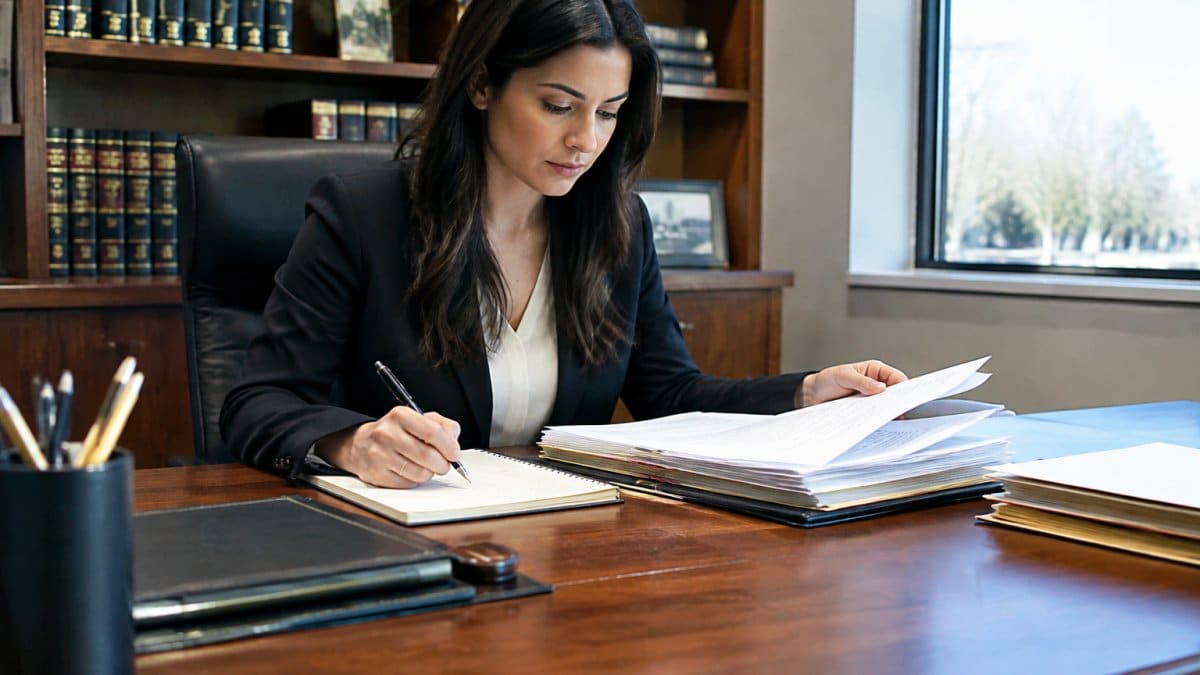
Each step has its own deadlines, so keeping a written calendar helps.
The discovery process follows a clear sequence, and each stage has its own deadlines.
| Step | What happens | Timing |
|---|---|---|
| Initial disclosures | Parties share witness names and key documents | Early in discovery |
| Written requests | Interrogatories, document requests, and requests for admission are sent | After the defendant responds |
| Responses | Each party answers within the rules' deadline | Set by the rules |
| Depositions | Witnesses answer questions under oath with a court reporter | Mid-discovery |
| Expert disclosures | Experts are identified and reports shared | Before close |
| Motions and disputes | Disagreements go to the judge | As needed |
| Close of discovery | No new evidence can be requested after the final date | Set by the court |
Lawyers use several tools to collect information. Each tool serves a different purpose.
Depositions are live questioning sessions. A witness answers questions under oath, and a court reporter records every word. Depositions let attorneys judge how a witness will hold up at trial.
Interrogatories are written questions that must be answered in writing and under oath. They are useful for gathering facts, names, and dates quickly.
Requests for production ask the other side to hand over documents, photos, medical records, or electronic files.
Lawyers often use all three tools together, since each one fills a different gap in the evidence.
For a closer look at what a deposition involves, see What Happens During a Personal Injury Deposition.
Requests for admission ask the other side to confirm or deny specific facts in writing. For example, a request might ask the other party to admit that a traffic light was red. Facts that go unanswered or are denied can be proven later, which saves time at trial.
Electronic evidence now plays a large role. Text messages, dashcam video, GPS data, and social media posts can all matter. Preserving these items early is essential, since they can be lost quickly.
For tips on keeping strong records, read 5 Ways to Document Evidence for Lowball Settlements.
The length of discovery varies widely. Simple cases may finish in a few months. Complex cases, such as those involving medical malpractice or serious injuries, can take a year or more.
Several factors affect the timeline:
Many people ask how long a car accident case takes overall. You can read a general timeline in How Long Does A Car Accident Case Take. For a local view, see How Long Will My Car Accident Case Take To Settle In Nashville.
Responding to discovery is where cases are most often damaged by accident rather than by strategy. A missed deadline, a deleted text thread, or a signed verification that overstates what a party knows can each create problems that are hard to undo. The practical work breaks into a repeatable sequence.
1. Calendar the deadline the day the request arrives. Under the Federal Rules of Civil Procedure and the rules of the court where the case is pending, response deadlines are set by the rules and any scheduling order, and can be shortened or extended.
2. Issue a litigation hold immediately. Once a lawsuit is filed, or even when one is reasonably anticipated, a party has a duty to preserve relevant records. That includes emails, text messages, photos, dashcam and surveillance video, GPS data, social media posts, cloud-stored files, and metadata.
3. Gather before you draft. Collect documents and data that fit each request, then draft responses that match what was actually produced. Answering from memory and promising to "supplement later" is risky; most practitioners find it is better to produce what exists and state clearly what does not.
4. Answer each request separately and on the record. For interrogatories, respond in writing under oath, numbering each answer to match the question. For requests for production, state whether responsive materials are being produced, withheld on a stated basis, or do not exist.
**5. Because objections must rest on a specific legal basis, parties should also distinguish them from practical steps such as arranging subpoena delivery services, which do not determine whether a request is objectionable.
6. Verify before signing. Interrogatory answers and requests for admission typically require a signed verification from the party, not just the attorney. Read every answer before signing and correct anything inaccurate, even if the error favors your side.
7. Ask for an extension before the deadline, not after. If you need more time, request it in writing from the other side or file a motion with the court before the response date passes. Courts are far more forgiving of a timely extension request than of a late response.
8. Supplement when new information appears. The rules generally require a party to supplement earlier responses when new responsive information becomes available. Build a reminder into the case calendar so supplements are not forgotten.
Not every request must be answered in full. Learn what to do when a claim is denied in Insurance Denies Claim: What Happens If Insurance Denies Car Accident Claim. A party can object when a request is overbroad, unduly burdensome, seeks information protected by privilege, or asks for material prepared in anticipation of litigation.
Privilege and work product. Attorney-client communications and attorney work product are the two most common protections. When a party withholds documents on either basis, it typically must produce a privilege log that identifies each withheld item, its date, its author and recipients, and the basis for withholding, without revealing the protected content. A log that is vague or produced late can lead a court to order the documents turned over anyway.
Objection mechanics. Objections should be stated with specificity and tied to the request. Boilerplate objections copied across every interrogatory or document request are frequently overruled, and in some courts they can waive the objection. If part of a request is proper and part is not, the responding party generally must answer the proper part and object to the rest rather than withholding everything.
Meet and confer. Before asking a judge to resolve a discovery dispute, most courts require the parties to confer in good faith, often by phone or video, and to certify that the effort occurred. Many disputes resolve at this stage once each side explains what it actually needs and what it can realistically produce.
Motions to compel and protective orders. If conferring fails, the requesting party can file a motion to compel, asking the court to order a response. The responding party can seek a protective order to limit, condition, or forbid the requested discovery, for example to shield confidential business records or sensitive medical information. Courts weigh relevance, burden, and proportionality, and may narrow a request rather than grant or deny it outright.
Sanctions. A party that fails to respond, produces incomplete or misleading materials, or destroys evidence after a preservation duty attaches can face court-ordered sanctions. Depending on the rules and the conduct, those can include paying the other side's attorney's fees, being barred from using certain evidence, adverse inference instructions to the jury, or in serious cases default judgment.
Costs and proportionality. Discovery is not unlimited. The federal rules tie permissible scope to the needs of the case, the amount in controversy, the parties' resources, and whether the burden of a request outweighs its likely benefit. A party facing an expensive or sprawling request can object on proportionality grounds and ask the court to shift or limit costs, particularly for electronic evidence.
Once discovery closes, the case moves toward its next stage. Many cases settle at this point, since both sides now know the strengths and weaknesses of their positions. Others go to motions, where a judge may rule on key legal questions, or to trial.
If you have questions about your own case, a consultation with a qualified attorney is the best way to get advice based on your facts.
Discovery commonly runs several months and can extend past a year in complex cases involving many parties, medical records, or electronic evidence. Timelines are set by the court's scheduling order and the rules of civil procedure, and a judge can extend deadlines for good cause. Your attorney can give a realistic estimate based on your court and the specifics of your case.
Many civil cases settle during or after discovery, because both sides have a clearer picture of the evidence and the strength of their positions. Settlement is not guaranteed, and some cases proceed to trial. Discovery often shapes settlement negotiations, particularly when medical records, witness testimony, and insurance documents are exchanged.
If you are a party to a lawsuit, you generally must respond to properly served discovery requests and answer deposition questions under oath, unless a valid objection or privilege applies. Your attorney can review each request, raise objections where appropriate, and help you prepare. Ignoring requests can lead to court orders or sanctions.
Yes. Information obtained through depositions, interrogatories, document production, and admissions can generally be used at trial or in motions, subject to the rules of evidence. Deposition testimony may be used to impeach a witness whose trial testimony differs. Your attorney can explain how specific evidence may be used in your case.

Cummings Law Car Accident & Personal Injury Lawyers Address: 4235 Hillsboro Pike #300, Nashville, TN 37215