Last Updated: November 20, 2026
Quick Summary
To handle property damage claims after an accident, report the crash promptly, document all damage with photos and a police report number, and file with either the at-fault driver's insurer or your own collision coverage. Get at least two written repair estimates and compare them line by line before accepting any settlement offer.
A property damage claim is a request to an insurance company to pay for repairs or replacement of your vehicle and other damaged property after a crash. Handling property damage claims after an accident is a process that trips up many people, so it helps to understand the steps before you begin.
Property damage claims cover:
These are two separate claims, and mixing them up costs people money. A property damage claim pays for what was damaged. A personal injury claim pays for medical bills, lost wages, and pain and suffering.
The property side often settles fast. The injury side takes longer. Signing a quick property release can sometimes affect your injury claim, so read every document before you sign.
You have two paths, and the right one depends on your coverage and your patience.
File with the at-fault driver's insurer if you want their company to pay directly. This is called a third-party claim. It keeps your deductible untouched, but their adjuster works for them, not you.
File with your own insurer if you carry collision coverage. Your company pays for repairs minus your deductible, then may pursue the other driver through subrogation.
Many people choose the at-fault route first when liability is clear, because it can avoid paying a deductible up front.
Here is the order that keeps a claim moving:
Watch out: a delay of even a few days can complicate a claim. Report the crash promptly.
Following these steps in order keeps a property damage claim moving and avoids delays.
| Step | What to do | Timing |
|---|---|---|
| 1 | Call the police and get an accident report number | At the scene |
| 2 | Exchange name, insurer, policy number, plate with other driver | At the scene |
| 3 | Notify your insurer, even if filing elsewhere | Same day |
| 4 | Get claim number and adjuster's name and direct line | When opening claim |
| 5 | Ask for the claim in writing and confirm documents needed | When opening claim |
| 6 | Keep a log of every call, date, and person | Throughout the claim |
Strong documentation wins disputes. Photograph everything before the car moves if it is safe to do so.
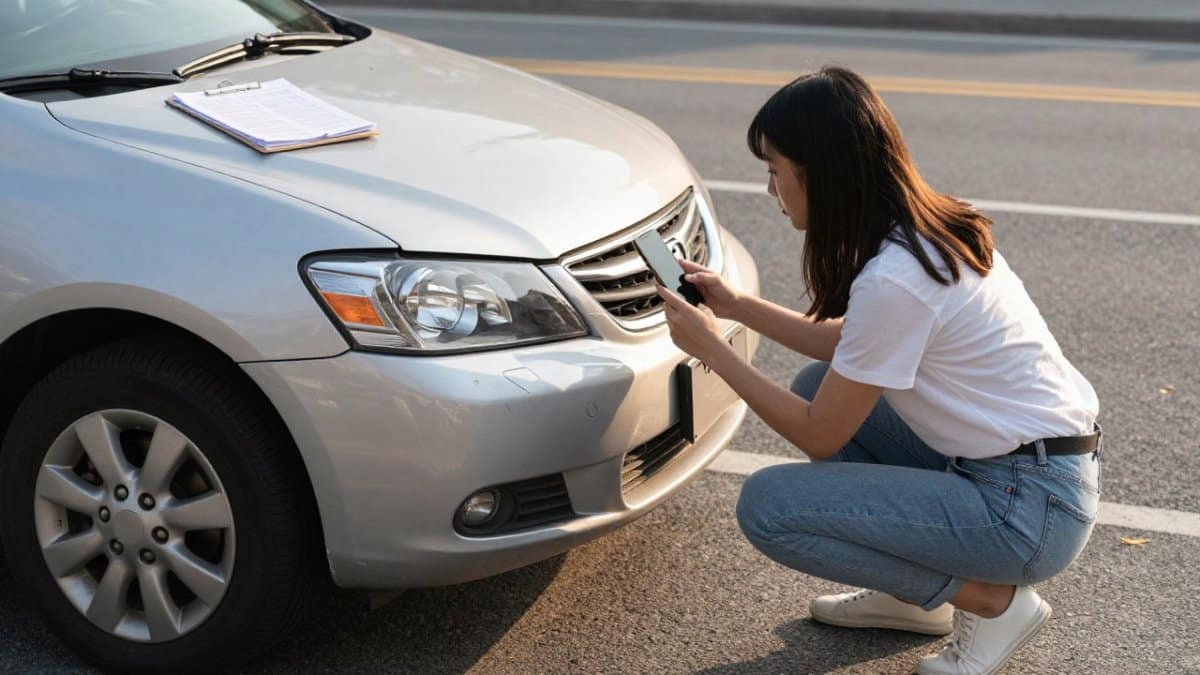
Collect and keep:
Digital records matter. Save texts, emails, and voicemails from the other driver in one folder.
The adjuster will typically inspect the car and write an estimate. You do not have to accept the first number, and understanding how that number is built can help you avoid a shortfall you pay yourself.
Most insurers use estimating software that prices parts and labor by ZIP code and applies a labor rate the insurer has set with its network shops. The estimate typically separates:
Ask the adjuster for the written estimate and confirm which parts type was used. A common pattern is an initial estimate that covers visible damage only; hidden damage behind panels, bumper covers, and the frame is added later as a supplement once the shop disassembles the vehicle.
Get at least two written estimates from licensed shops, and ask each shop to note any damage the insurer's estimate missed. Compare line by line rather than by total. If your shop's estimate is higher, send it to the adjuster with photos of the hidden damage and a short written explanation of each difference. Insurers will often revise the estimate or issue a supplement rather than force a dispute. (Source: Tennessee Department of Commerce & Insurance)
Watch out: do not authorize repairs before the insurer has inspected the car or agreed in writing to the estimate, or you may be stuck paying the difference.
A property damage settlement should cover parts, labor, paint, taxes, and any supplements, plus applicable towing, storage, and rental or loss-of-use amounts. Request a written breakdown of every line item. If the offer looks low:
If your car needs a safety inspection afterward, review Tennessee's car inspection laws so you know what is required. Our guide on how much you get from a car crash claim walks through how offers are built.
Rental car coverage after an accident depends on your policy or the other driver's, and many people assume a rental is automatic. It usually is not. The practical question is not just whether coverage exists, but who authorizes the rental, at what daily rate, and for how many days.
Ask the adjuster in writing whether a rental is authorized, the daily rate, the total cap, and the end date. A common pattern is an authorization that expires before the repair is finished; request an extension in writing before the cap runs out.
Keep every receipt and a simple log of date, amount, and purpose. Storage fees climb fast, so move the car to a shop or your driveway as soon as you can, and confirm in writing who authorized the storage.
Watch out: paying a storage lot without confirming who is responsible can make the charge harder to recover later.
If you did not rent a car, you may still claim loss of use by documenting reasonable alternative transportation costs or a rental rate for a comparable vehicle during the repair period. Keep rideshare receipts, mileage logs, and any written quotes for a substitute rental.
A denial is not the end of the claim. It is a starting point for a challenge.
First, get the denial in writing and read the reason. Common grounds include disputed fault, coverage limits, or a valuation you disagree with.
Then take these steps:
If fault is disputed or the other driver is uninsured, the path changes. Our article on what happens when insurance denies a car accident claim covers the next moves in detail, and our guide on how long an insurance appeal takes helps you plan timing. If the dispute heads toward a hearing, read how to prepare for insurance claim mediation.
A diminished value claim asks the insurer to pay for the drop in your car's resale value after a repaired crash. Even a perfect repair leaves a vehicle history that buyers discount.
Three types exist:
To support a diminished value claim after an accident, gather your pre-crash valuation, the repair invoice, and an independent appraisal. Many insurers resist these claims, so a written appraisal and a clear demand letter help.
Property damage claims reward preparation and punish guesswork.
Property damage covers physical harm to your vehicle and other property, including dents, broken glass, bent frames, and damage to items inside the car. It also includes damage to fences, mailboxes, guardrails, and other structures. Property damage claims are separate from personal injury claims, which cover medical bills and lost wages. Keeping the two claims distinct helps you track repair costs, rental expenses, and towing fees without mixing them with injury-related losses.
Yes. You can file a third-party claim directly with the at-fault driver's insurer, which often avoids paying your deductible. The tradeoff is that the other insurer will investigate fault before accepting liability, which can slow payment. Filing with your own insurer under collision coverage usually moves faster but requires your deductible upfront. Many drivers compare both routes and choose based on how clearly fault is established and how urgently they need repairs.
Collect photos of all vehicle damage from multiple angles, the accident scene, and any other property affected. Get the police report number, the other driver's insurance information, and witness names and contact details. Save repair estimates, towing receipts, and rental car bills. Digital records matter too: dashcam footage, text messages, and timestamps help confirm the sequence of events. A complete file makes it harder for an adjuster to dispute the extent of damage or delay your settlement.
Ask for the denial in writing and the specific policy language relied on. Request a re-inspection if the estimate missed hidden damage, and get an independent estimate from a repair shop you trust. Send a written demand letter with your documentation and a deadline. If the insurer still refuses, you can file a complaint with your state insurance regulator, pursue subrogation through your own insurer, or take the dispute to small claims court. An attorney can help when the amount or complexity justifies it.

Cummings Law Car Accident & Personal Injury Lawyers Address: 4235 Hillsboro Pike #300, Nashville, TN 37215