Last Updated: October 26, 2026
Quick Summary
After a catastrophic amputation injury, call 911 immediately, apply direct pressure to control bleeding, and preserve the amputated body part on ice. These first actions can save the person's life and increase chances of successful reattachment.
Calling 911 is the single most critical action after a catastrophic amputation injury. Every second matters when a body part has been severed. Emergency responders can stabilize the injured person and get them to a trauma center where reattachment may be possible.
Tell the dispatcher exactly what happened: "We have a catastrophic amputation injury." Give your location, describe the injury (complete, partial, or crush), and say whether the person is conscious and breathing. This alerts the hospital to have a surgical team standing by.
Do not wait to see if bleeding stops on its own or if the person seems stable. Amputation injuries can deteriorate rapidly. Preservation of traumatic, completely amputated or avulsed parts research describes these injuries as potentially causing long-term disability, making immediate professional intervention essential.
While waiting for the ambulance, keep the injured person calm and still, and tell them what you are doing and why. If they are unresponsive, position them on their back with their head turned to one side to keep the airway clear.
You may want to link to how-to-prepare-for-a-catastrophic-injury-settlement here after the immediate emergency is managed.
Severe bleeding from an amputation can be life-threatening within minutes. Direct pressure is the most effective first-aid method to slow or stop it before responders arrive.
Apply firm, continuous pressure directly to the wound using a clean cloth, gauze pad, or any absorbent material.
If blood soaks through, do not remove the cloth, layer another on top and keep pressure on for at least 10 to 15 minutes.
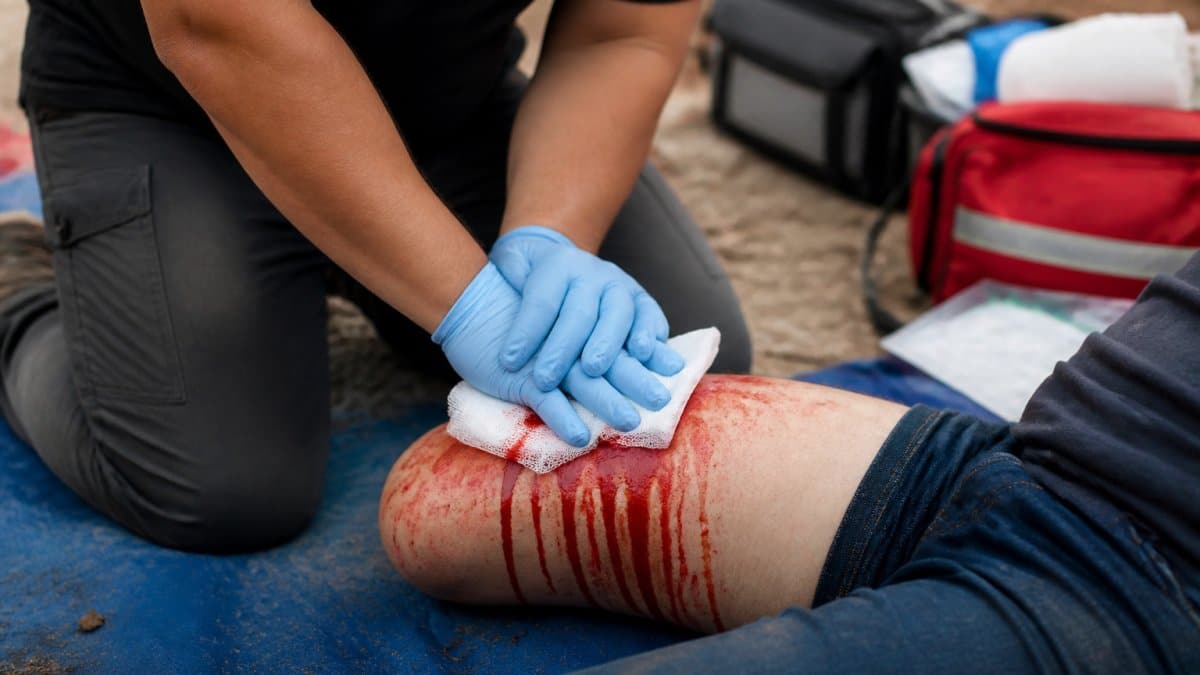
Elevate the injured area above the heart if possible and if it does not cause additional injury. Do not move the area more than necessary.
Keep the injured person warm. Shock can develop quickly after severe blood loss, and cold makes it worse. Cover them with a blanket or coat, but avoid overheating.
If direct pressure does not control bleeding after 10 to 15 minutes, a tourniquet may be necessary. It is a tight band applied above the wound that cuts off blood flow to the limb, a life-saving tool when bleeding cannot be stopped any other way.
Apply the tourniquet 2 to 3 inches above the wound, between the wound and the heart, never directly on the wound. For a lower-leg amputation, apply it around the thigh; for a forearm, around the upper arm. Tighten until bleeding stops and you feel no pulse below the tourniquet.
A tourniquet can be made from a belt, strip of cloth, bandage, or commercial tourniquet, and must be tight enough to stop all blood flow. Once applied, do not loosen or remove it, leave it until medical professionals take over.
A tourniquet causes pain and tissue damage the longer it stays on, but it prevents death from bleeding. In a catastrophic amputation, stopping the bleeding matters more than comfort; professionals will manage pain and tissue preservation at the hospital.
After controlling bleeding, assess whether the person is conscious and breathing. Tap their shoulder and shout, "Can you hear me?" If they do not respond, look for chest movement and listen for breath sounds.
If the person is unconscious and not breathing, begin CPR immediately if trained: place the heel of one hand on the center of the chest and push hard and fast at 100 to 120 compressions per minute. If you are not trained, call 911 and let the dispatcher guide you through the steps.
If the person is breathing but unconscious, place them in the recovery position, on their side with the head tilted back slightly to keep the airway open and prevent choking. Monitor their breathing until help arrives.
If the person is conscious and breathing normally, keep them calm and still. Reassure them that emergency help is on the way and that you are staying with them.
Shock is a life-threatening condition that can develop after severe injury and blood loss. Recognizing it early and managing it can save a life.
Signs of shock include pale or bluish skin, rapid or weak pulse, rapid breathing, confusion or anxiety, nausea or vomiting, and loss of consciousness. The person may feel cold and clammy, thirsty, or unusually tired.
If you suspect shock, lay the person flat and elevate their legs about 12 inches above heart level with a pillow or rolled cloth to help blood flow to vital organs.
Keep the person warm with a blanket or coat, but do not overheat them.
Stay with the person and monitor changes in consciousness, breathing, and pulse. Report these observations to emergency responders, they help medical professionals understand how the injury has progressed. (Source: National Highway Traffic Safety Administration (NHTSA) data on accident severity)
Keeping the injured person still and in a safe position reduces the risk of further injury and shock. Movement can restart bleeding, cause tissue damage, and worsen shock.
If the person is conscious, ask them to stay still and explain that movement can make bleeding worse. If they are on the ground, do not move them unless there is immediate danger (fire, traffic, collapsing structure), wait for responders.
If you must move them to safety, support the injured limb carefully and avoid bending or twisting it. Keep an amputated leg straight, or keep an amputated arm supported and still.
Place them in a comfortable position that does not put pressure on the injury, supporting their head with a pillow or rolled cloth, and position them so they can see you.
Do not let the person get up and walk around, even if they say they feel fine. Shock can cause confusion, and they may not realize how serious their condition is. Keep them still until paramedics take over.
After controlling bleeding, cover the wound with a clean or sterile dressing to protect it from dirt and bacteria. Use sterile gauze if available, otherwise a clean cloth.
Now for the amputated body part: finding and preserving it greatly increases the chances of successful reattachment. Lower extremity amputation clinical review covers indications and decision-making about amputation care, emphasizing the importance of rapid transport and proper preservation.
Search the immediate area for the severed part, on the ground, in debris, and in any vehicles or machinery involved. Handle it gently and avoid touching the wound surface.
Wrap the amputated part in a clean, dry cloth, place it in a sealed plastic bag or waterproof container, and set the bag on ice in a cooler if available.
Label the bag with the time it was found and the body part if possible, and give it to responders when they arrive.
You may want to link to proving-permanent-disability guidance here since amputation results in permanent disability that will need to be documented and proven for claims.
Before approaching an injured person after a catastrophic amputation, make sure the scene is safe.
Watch for broken glass, sharp metal edges, unstable structures, or electrical hazards. Do not put yourself in danger trying to help.
In a motor vehicle accident, turn off the engine, set the parking brake, turn on hazard lights, and move vehicles out of traffic if possible.
If the amputation happened at work, the scene may involve machinery, chemicals, or heights. Do not touch machinery or enter confined spaces or hazardous atmospheres.
Document what you observed: how the injury happened, the time, whether the person was conscious, and what first aid you provided.
After the injured person is transported to the hospital, you may want to seek legal guidance.
Quick Reference: 10 Steps to Take After a Catastrophic Amputation Injury
| Step | Action | Why It Matters |
|---|---|---|
| 1 | Call 911 immediately | Emergency responders can stabilize and transport the person to a trauma center |
| 2 | Apply direct pressure with clean cloth | Stops or slows severe bleeding to prevent shock and death |
| 3 | Use a tourniquet if pressure fails | Cuts off blood flow to save life when direct pressure is not enough |
| 4 | Check breathing and responsiveness | Determines if CPR or airway management is needed |
| 5 | Recognize and manage shock | Prevents shock from worsening and causing organ failure |
| 6 | Keep the person still | Reduces risk of restarting bleeding and additional injury |
| 7 | Cover wound and preserve amputated part | Protects tissue and increases chances of reattachment |
| 8 | Assess scene safety | Protects you and prevents additional injuries |
| 9 | Document observations | Helps emergency and hospital staff understand the injury |
| 10 | Seek legal guidance if needed | Ensures you understand rights and options for compensation |
The moments immediately after a catastrophic amputation injury can be critical.
If the amputation resulted from an accident or medical error, you may have legal rights.
Wrap the severed part in clean, damp gauze or a clean cloth. Place it in a sealed, waterproof bag and keep it cool by placing that bag on ice or in cold water during transport to the hospital. Do not rinse it, clean it, or place it directly on ice. Avoid allowing it to freeze. Prompt preservation increases the chances of successful reattachment. Transport it with the injured person to the hospital and inform medical responders immediately.
Call 911 immediately and stay on the line. Apply direct, firm pressure to the wound with a clean cloth or gauze to control bleeding. If the injured person is conscious and breathing, keep them calm and still. Check for signs of shock (pale skin, rapid heartbeat, weakness) and lay them flat with legs elevated if shock develops. Do not probe or clean the wound. Cover it with a sterile dressing once bleeding is controlled. Preserve any amputated part for transport.
Amputation injuries caused by negligence, motor vehicle accidents, or medical malpractice may qualify for compensation. Cummings Law Car Accident & Personal Injury Lawyers handles personal injury and medical malpractice cases and works on a contingency fee basis, so you pay no fees unless the firm wins your case.
Apply a tourniquet only if direct pressure with a clean cloth or gauze fails to control severe bleeding after 2-3 minutes of continuous pressure. Place the tourniquet 2-3 inches above the wound, between the injury and the heart. Tighten it until bleeding stops completely. Note the time you applied it and inform medical responders immediately. Tourniquets are a life-saving intervention when bleeding cannot be stopped by other means, but they require urgent medical evaluation.
Reattachment is possible for some amputations, especially when the severed part is preserved quickly and transported promptly to a hospital with surgical replantation capability. Success depends on the type of amputation (clean cuts are more favorable than crush injuries), how long the part was without blood supply, and the patient's overall health. Proper preservation and rapid transport to an emergency room dramatically improve the chance of successful reattachment. Medical professionals will assess feasibility upon arrival.

Cummings Law Car Accident & Personal Injury Lawyers Address: 4235 Hillsboro Pike #300, Nashville, TN 37215