Last Updated: November 1, 2026
Quick Summary
Tennessee malpractice cases generally require expert witness requirements to be met, meaning a qualified medical professional must explain the standard of care and how the provider fell short. A bad outcome alone does not prove negligence, so a clear, well-supported link between the care given and the harm must be shown.
Tennessee malpractice cases rarely get decided on the facts alone. In most of them, a jury has to hear from a qualified medical professional who can explain what the standard of care required and how the defendant fell short. Cummings Law Car Accident & Personal Injury Lawyers represents injured patients and families across Middle Tennessee.
Understanding expert witness requirements in Tennessee malpractice cases early can save months of frustration. Many people assume a bad outcome automatically proves negligence. It does not.
Medical care is technical. Our overview of common causes of medical malpractice in Tennessee shows why these claims so often depend on expert proof. Jurors are ordinary people, and most of them have never read a chart in detail or learned what a reasonable surgeon does before a procedure. That gap is why expert testimony matters so much.
Without a qualified expert, a claim can fail even when the care was clearly poor. That is why we treat expert support as a core part of the case from the first review.
An expert witness is a licensed professional who reviews the records and explains, in plain language, what happened. The expert does not decide who wins. Their job is to give the court and jury an opinion grounded in medical training and experience.
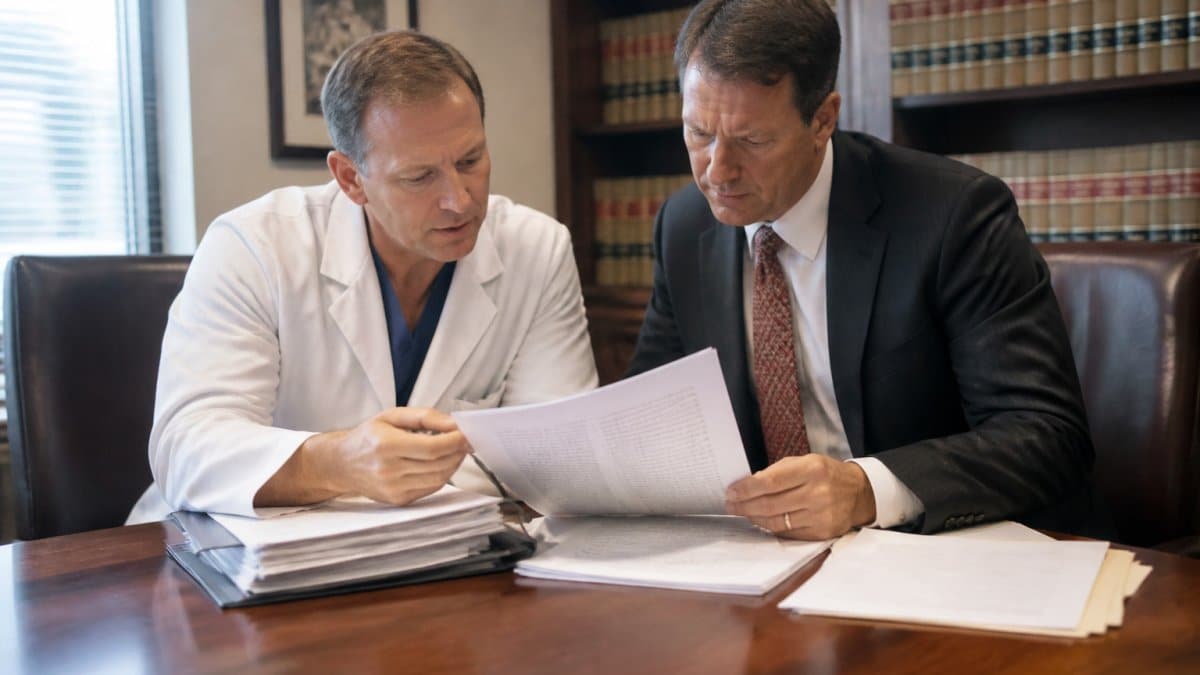
A typical expert review focuses on a few questions:
The expert's written opinion becomes the foundation for depositions and, if needed, courtroom testimony. A weak or vague opinion can sink an otherwise solid case, so the quality of the review matters as much as the conclusion.
The standard of care describes what a reasonably competent provider in the same field would have done under similar circumstances. Our guide to the practical steps Tennessee requires for proving medical malpractice walks through how that breach is established. Our page on how malpractice is proven explains the full proof burden in detail.
Here is a practical way to think about it:
A common mistake is focusing only on the bad outcome. Courts care about the conduct that led to it. Tie every point back to a specific decision in the chart.
The general rule, that an expert must be qualified by knowledge, training, and experience in the relevant field, is only the starting point. Tennessee layers specific statutory criteria on top of it, and those criteria are where most qualification fights are actually won or lost.
Tennessee's medical malpractice rules are set out in the Tennessee Code. Read the current expert qualification provisions before you retain anyone, and confirm the current text against the official Tennessee Code.
Section 29-26-115(b) generally requires that a testifying expert:
A qualification challenge often turns on whether the expert's licensure, recent practice in the specialty, and practice location satisfy the applicable requirements. Defense counsel may concede general competence and attack one of these points instead.
Build a qualification file at the outset, because you will need it at the disclosure stage and again at deposition:
A challenge to qualifications is a pretrial motion, and it is decided on the record you build early. An expert with clear, documented credentials on all three statutory criteria is far harder to exclude than one whose file has gaps.
Tennessee Code Annotated Title 29, Chapter 26
Tennessee's certificate of good faith is a procedural requirement in health care liability cases. Understanding what it demands, and when, is the difference between a claim that proceeds and one that is dismissed before the merits are ever reached.
The requirement lives in Tenn. Code Ann. § 29-26-122. In a health care liability action, the plaintiff must file a certificate of good faith stating that the plaintiff or counsel has consulted with at least one competent expert who has provided a signed written statement confirming that there is a good faith basis to maintain the action.
The expert consulted for the certificate should meet the applicable qualification requirements, and a signed written statement should be retained, since it may be requested in discovery.
Failure to file a compliant certificate can result in dismissal of the action. Do not plan around any exception to that requirement; confirm the current official rules.
A malpractice case has several clocks running at once, and they interact. Build the timeline on day one:
The certificate requirement forces the expert consultation to happen before filing, which is actually an advantage: it front-loads the record review and surfaces qualification problems while there is still time to retain a different expert.
Retaining the expert, obtaining the signed written statement, and completing the qualification file before drafting the complaint can help keep the record consistent. The certificate, the disclosure, and the deposition then rest on the same documented foundation.
Tennessee Code Annotated Section 29-26-122
The certificate of good faith and the surrounding deadlines follow a fixed sequence that the article lays out:
| Step | What to do | Timing |
|---|---|---|
| Statute of limitations | Confirm accrual date from the records | Confirm against official Tennessee Code |
| Pre-suit notice | Give advance written notice of the claim | Confirm timing and contents against official text |
| Certificate of good faith | Consult expert; file signed written statement | With the complaint or within statutory window |
| Expert disclosures | Disclose expert witnesses | Under procedural rules and scheduling order |
| Depositions | Expert is deposed by defense counsel | After disclosure |
| Trial testimony | Expert defends opinion at trial | At trial |
People often confuse medical malpractice with legal malpractice, and the expert rules differ. A medical malpractice claim usually requires a medical expert who can address clinical standards. A legal malpractice claim against an attorney generally requires an expert who practices law and can speak to what a competent lawyer would have done.
Mixing these up can cause serious problems. A physician cannot easily opine on legal standards, and a lawyer cannot speak to surgical technique. Confirm which type of claim you have before retaining anyone.
If you believe a provider in Middle Tennessee made a serious mistake, the first step is a careful review of your records. You can also review the reasons to hire a medical malpractice lawyer to see what an evaluation can address.
Cummings Law Car Accident & Personal Injury Lawyers can help you understand whether your situation calls for expert review. The firm handles personal injury and medical malpractice claims on a contingency fee basis. Contact us to talk through your options and the deadlines that may apply.
In most Tennessee medical malpractice cases, the plaintiff must present expert testimony to show the applicable standard of care, a breach of that standard, and that the breach caused the injury. Lay jurors generally cannot determine these elements without medical expertise. Whether a specific case requires expert proof depends on its facts, so a consultation with a Tennessee malpractice attorney is the right way to confirm the requirement for your situation.
Tennessee law sets specific qualification rules for medical experts, generally tied to the expert's licensure, active practice, and specialty relative to the defendant. Because the statutory requirements are detailed and have been amended over time, the current text of the Tennessee Code should be checked directly. Your attorney can confirm which qualifications apply to the defendant provider in your case.
A physician can serve as a medical expert witness if they meet the qualification requirements that apply to the defendant's specialty and practice. Attorneys often look for a provider in a similar field who can speak to the accepted practice in the relevant circumstances. Whether a particular doctor qualifies depends on that doctor's credentials and the rules in effect at the time the case is filed.
Attorneys typically identify potential medical expert witnesses through professional referrals, medical societies, published literature, and prior case experience. A strong candidate should have relevant training, current clinical knowledge, and no conflicts of interest. Attorneys usually review a candidate's records and prior testimony before retaining the expert, since the expert's opinion must withstand challenges from the defense.

Cummings Law Car Accident & Personal Injury Lawyers Address: 4235 Hillsboro Pike #300, Nashville, TN 37215