Last Updated: October 31, 2026
Quick Summary
Phone use is the most frequently cited cause of distracted driving crashes in Tennessee, followed by in-vehicle tasks such as adjusting controls, reaching for objects, and interacting with passengers. Texting is the worst offender because it combines visual, manual, and cognitive distraction at once. Even hands-free calls pull mental focus from the road.
In 2024, 3,208 people died in distraction-affected crashes across the country, according to the National Highway Traffic Safety Administration's distracted driving data.
Distracted driving is any activity that pulls a driver's eyes, hands, or mind away from the road.
Crashes caused by distraction often leave victims with serious injuries and unexpected losses.
Many common causes of distracted driving are ordinary behaviors, such as texting, adjusting the radio, or reaching for a cup.
Below, we break down each cause, what the crash data shows, and how to protect yourself.
Safety researchers group every distracted driving cause into three categories. Knowing them helps you spot the risk before it turns into a collision.
Visual distraction is anything that takes your eyes off the road.
Manual distraction means your hands leave the wheel. Reaching for items, eating, or adjusting vehicle controls fit here.
Cognitive distraction is the trickiest. Your mind drifts away from driving. Zoning out, daydreaming, or getting lost in a passenger conversation all qualify.
Texting is the worst offender because it hits all three at once. Your eyes, hands, and focus all leave the road.
The Insurance Institute for Highway Safety's research on distracted driving links cellphone use to higher crash risk, especially when drivers manipulate the phone while moving.
The numbers tell a sobering story, but they also require a careful reading.
Nationally, the trend is similar. The National Safety Council's Injury Facts data shows 3,208 distraction-related deaths in 2024, about 2% below the 3,283 in 2023. The National Highway Traffic Safety Administration's distracted driving data puts the same figure at 3,208 for 2024.
Crash reports depend on drivers admitting what happened, and not every distraction is recorded.
There is a second problem. A crash is counted as "distraction-affected" when a police report notes a distraction, but the report rarely proves which activity caused the crash. A driver who was texting, eating, and arguing with a passenger may be logged under only one code.
No public dataset ranks every Tennessee distraction cause side by side. That ranking matches national research from the Insurance Institute for Highway Safety's research on distracted driving, which links cellphone manipulation to higher crash risk.
A common pattern in crash reports is that the distraction is identified only after phone records, dashcam footage, or witness statements are pulled. In other words, the data you see in a police post is the tip of the evidence, not the whole case.
Texting is a distraction drivers often rationalize. A single message can take your eyes off the road for several seconds.
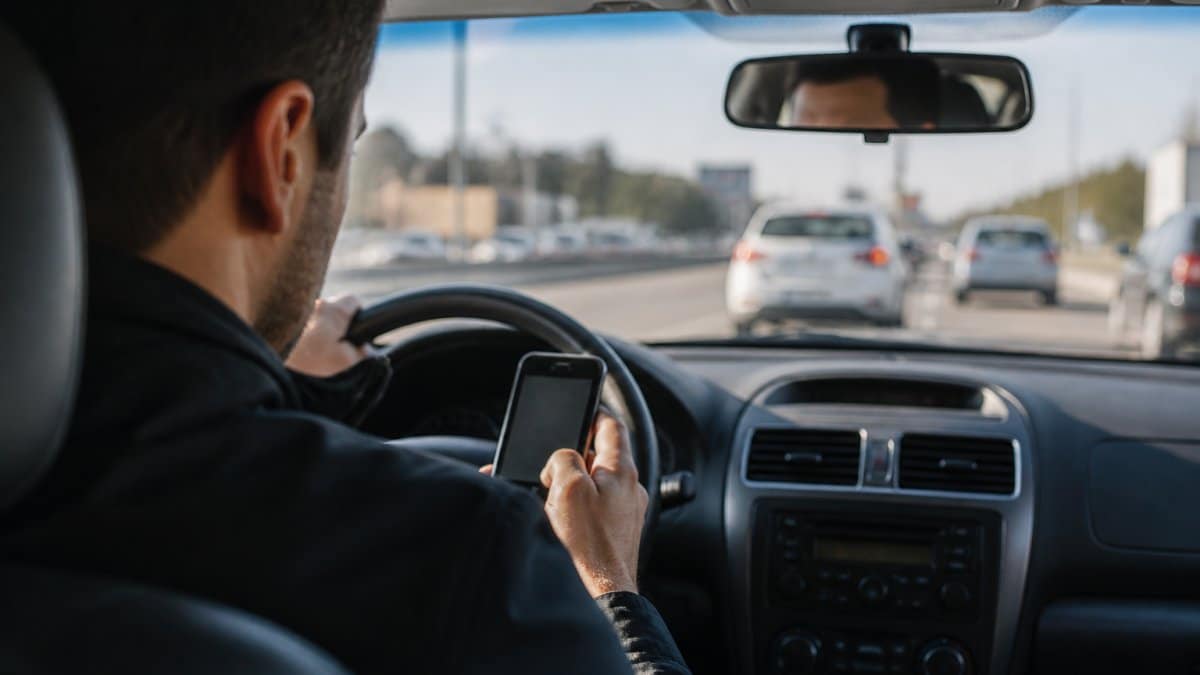
Texting and driving accidents often involve rear-end collisions and lane departures. The driver never brakes in time because they never saw the brake lights.
A common mistake is assuming hands-free texting solves this. It does not. Voice-to-text still pulls your mind off the road, which is cognitive distraction at work.
Phone use is one of the commonly reported causes of distracted driving. Here are everyday causes, described by how completely they pull a driver away from the task of driving.
Texting combines all three distraction types: your eyes leave the road (visual), your hands leave the wheel (manual), and your mind leaves driving (cognitive). A single glance at a message can take your eyes off the road for several seconds. Mitigating these split-second lapses requires a proactive approach to road safety that relies on mastering defensive driving techniques to anticipate and avoid the hazards created by inattentive motorists.
Prevention: Turn on Do Not Disturb While Driving before you shift into gear. Put the phone in a mount or a closed console. If you must respond, pull over.
Even hands-free calls pull mental focus from the road. The conversation competes with driving for the same attention, which is why cognitive distraction is the hidden risk in a call that looks safe.
Prevention: Let calls go to voicemail. Return them when you are parked. If a call is urgent, pull into a lot or rest area.
Programming an address while driving is a visual and manual distraction. Re-routing mid-drive, zooming in on a map, or reading turn-by-turn directions all take your eyes and hands away from the wheel.
Prevention: Set your destination before you shift into drive. Use voice guidance and mount the phone where a glance is enough. Pull over to change a route.
Heated or emotional talks raise cognitive distraction. Passengers can also become a manual distraction when a driver turns to make eye contact or gestures while talking.
Prevention: Keep conversations calm. Ask passengers to handle navigation and music. If a discussion needs your full attention, pull over.
Eating while driving and drinking while driving both take a hand off the wheel. Reaching for items in the passenger seat or floorboard is worse. It combines manual distraction with time spent looking away from the road.
Prevention: Eat before you leave or pull over to eat. Store loose items so you never reach for them. Keep what you need within easy reach before you start moving.
A quick tap on the dashboard seems harmless. It is not, especially in traffic. Adjusting the radio, climate controls, or mirrors takes your eyes and hands off the road for longer than most drivers realize.
Prevention: Set your music and climate controls before you drive. Use steering-wheel controls when available. Ask a passenger to adjust settings.
Here is how the everyday causes stack up, along with the fix the article recommends for each.
| Cause | Why it distracts | Prevention |
|---|---|---|
| Texting and smartphone manipulation | Eyes, hands, and mind all leave the road | Turn on Do Not Disturb; mount phone or close it in console |
| Talking on the phone, including hands-free | Conversation competes with driving for attention | Let calls go to voicemail; return them when parked |
| GPS and navigation systems | Programming or re-routing takes eyes and hands off wheel | Set destination before shifting into drive; use voice guidance |
| Passenger conversations | Heated talks raise cognitive distraction; turning to talk is manual | Keep conversations calm; ask passengers to handle navigation and music |
| Eating, drinking, and reaching for objects | Takes a hand off the wheel; reaching adds looking away | Eat before leaving or pull over; store loose items within easy reach |
| Adjusting music and vehicle controls | Eyes and hands off the road longer than drivers realize | Set music and climate before driving; use steering-wheel controls |
Most safety advice repeats the obvious. These habits actually cut crash risk:
One practical rule: if you would not do it while holding a hot pan, do not do it at 60 mph.
For broader habits, our guide on safe driving tips to avoid accidents covers the basics beyond distraction.
A driver who causes a crash through distraction may be liable for resulting harm.
That is why evidence matters. Phone records, dashcam footage, and witness statements may help show distraction at the time of a crash.
If you are weighing whether to handle the claim alone, our article on how to file a car accident claim without a lawyer in Tennessee explains the process and the risks.
A crash involving a distracted driver often turns on evidence, not argument. The sooner you preserve it, the stronger your claim.
Start with these steps:
Cummings Law Car Accident & Personal Injury Lawyers represents injured people in Middle Tennessee. The firm operates on a contingency fee basis, so you pay no fees unless the case is won.
If you were hurt by someone else's negligence, contact our personal injury attorney for a consultation. Our guide on what evidence to gather for a personal injury claim in Tennessee shows what to save, and our walkthrough of what happens after a car accident with injuries in Tennessee explains each step.
Phone use tops the list, including texting, scrolling, and talking on a handheld device. Navigation entry, eating and drinking, adjusting music or vehicle controls, reaching for dropped items, and passenger conversations also rank high. NHTSA counted 3,208 deaths in distraction-affected crashes in 2024, and the Sevierville Police Department notes phone use remains one of the top reported causes on Tennessee roads. Many of these behaviors combine visual, manual, and cognitive distraction at once, which is why they raise crash risk so sharply.
Official crash counts are best obtained from state and federal crash data sources. Treat agency social media figures as reported counts rather than audited statewide datasets, and ask an attorney to help you obtain the official crash report for your case.
Texting combines all three distraction types: your eyes leave the road, your hands leave the wheel, and your mind leaves the task of driving. IIHS research links texting and other cellphone manipulation to increased crash risk. That said, hands-free calls and GPS entry still create cognitive and visual distraction. A driver who looks away for a few seconds at highway speed covers significant ground. Any behavior that pulls attention from the road can support a negligence claim after a collision.
Call 911, get medical care, and ask that a police report be filed. Photograph the scene, vehicle damage, and any visible phone in the other driver's hand or mount. Collect witness names and insurance information, and avoid discussing fault with the other insurer. Then contact a Tennessee personal injury lawyer. Cummings Law works on a contingency fee basis, meaning no fees unless the case is won, and can discuss which evidence, such as phone records and crash data, may help show distraction.
If a distracted driver changed your life, you deserve a team that fights for every dollar of your recovery. Cummings Law Car Accident & Personal Injury Lawyers brings experience in Tennessee personal injury law, direct negotiation with insurance companies, and a record of protecting clients' rights from the first call to the final settlement. Get started with Cummings Law Car Accident & Personal Injury Lawyers and focus on healing while we pursue the compensation you deserve.

Cummings Law Car Accident & Personal Injury Lawyers Address: 4235 Hillsboro Pike #300, Nashville, TN 37215