Last Updated: October 22, 2026
Quick Summary
The most common mistakes in minor accident insurance claims are leaving the scene or reporting late, admitting fault at the roadside, and skipping evidence collection. Drivers also mishandle adjuster calls, ignore delayed injuries, accept early settlement offers, and file incomplete paperwork. Report promptly, document everything, and avoid fault statements in the first 48 hours.
Minor accident insurance claims become a major headache when the first two days are mishandled. At Cummings Law Car Accident & Personal Injury Lawyers, we see the same pattern: drivers treat a small collision as a formality, skip a step, and spend months fighting a claim that should have closed quickly. The mistakes in minor accident insurance claims usually happen in the first 48 hours.
Here is the sequence that protects you.
That checklist sounds simple. The mistakes below are what people do instead. For a plain-language walkthrough of the claim process, the California Department of Insurance consumer guide on what to do after an accident is a useful reference for how reporting and claims generally work.
The worst error turns a civil claim into a criminal problem.
Prompt reporting creates an official police record, preserves the other driver's information while memories are fresh, and starts the claim clock.
Do not assume a small dent means you can skip the call. If there is any property damage, any injury, or any dispute about what happened, report it.
"I'm so sorry, that was my fault." Six words that can cost you a settlement.
Fault determination is not yours to make at the roadside. Adjusters weigh the police report, witness statements, photographs, and vehicle positions.
What to say instead: exchange information, ask if anyone is hurt, and keep the conversation factual. "Let's get everyone's information and let the police sort out the details" works fine.
The same rule applies online. Social media posts about the accident, even casual ones, get pulled into claims. Post nothing until the claim is resolved.
Skipping evidence collection quietly kills claim value. Memory fades, vehicles get repaired, and skid marks wash away; what you capture in the first hour is often all an adjuster ever sees.
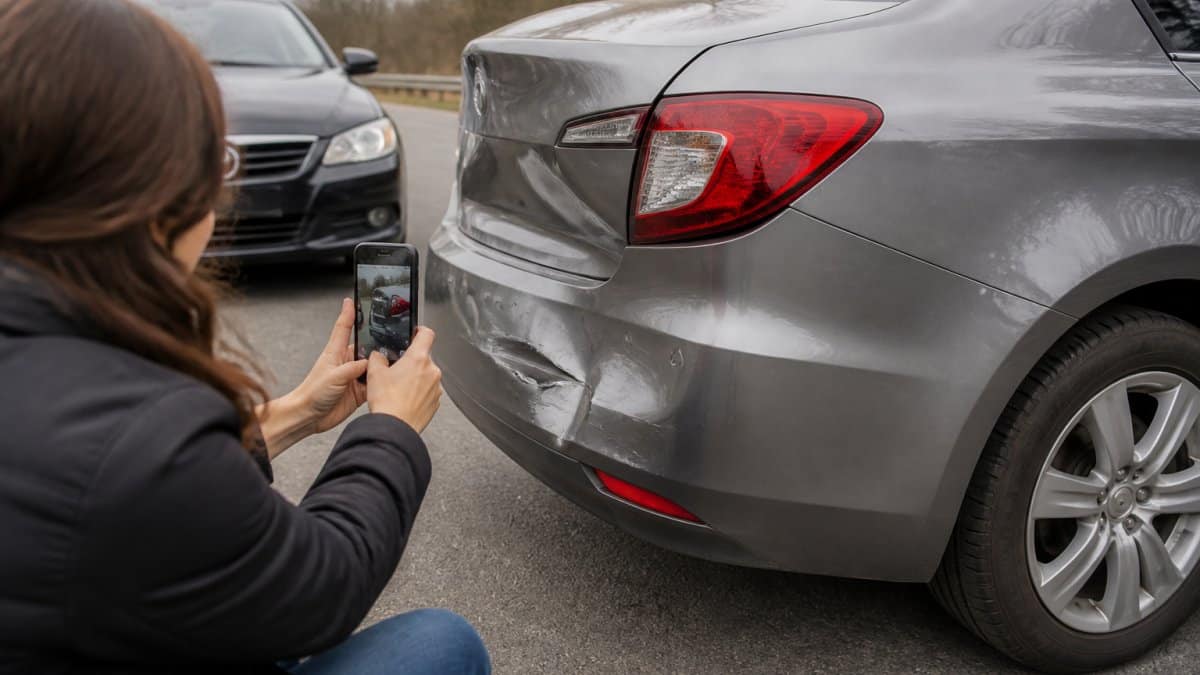
Missing witness information is the most common gap. Bystanders leave, and without a name and number, their account is gone. Ask before you leave the scene.
This is where minor-accident claims are won or lost, and the step most drivers skip, assuming the body shop and adjuster will sort it out. They won't, not in your favor, unless you build the record.
Drivers often accept the insurer's first repair estimate, pay the deductible, and only later learn the shop found additional damage, by then the supplement is harder to support. Document before the repair.
An adjuster's job is to resolve the claim for as little as possible. The mistake is treating the first call as a friendly check-in, or refusing to call at all for fear of saying the wrong thing. Both cost you.
Your policy generally requires prompt notice; delaying the call can give the insurer a coverage defense. But notice and statement are different things, and the mistake is letting one become the other.
You can give notice on day one and still decline a recorded statement until you've reviewed your policy and spoken with a medical provider. If the adjuster pushes, ask for the request in writing and which policy provision requires a statement at that stage.
What to say, and not say, when notifying your own insurer:
On a minor accident, coverage often matters more than liability. Before filing, understand which coverage line pays and what it costs you.
State insurance department consumer guides on filing auto claims and understanding deductibles is a useful starting point for confirming how your state treats not-at-fault claims and what your policy is required to disclose.
Drivers often file a small collision claim, pay the deductible, then learn at renewal that the claim raised their rate, when paying out of pocket would have cost less.
Delayed injuries are the norm. Adrenaline masks pain for hours, and soft-tissue damage often surfaces the next morning.
A treatment gap is the single easiest thing for an adjuster to attack. It suggests the injury was not serious, or was not caused by the collision.
Keep every record: medical records, bills, and out-of-pocket expenses. If you miss work, log the dates and lost wages.
The first settlement offer is rarely the best, and it usually arrives before you know your full medical expenses. Accepting it closes the claim permanently.
Before you respond to any offer, confirm three things:
If the repair estimate exceeds your deductible and the other driver was at fault, filing may still make sense even when the numbers look small. That is a judgment call, not a rule, and it depends on your policy. Progressive's guidance on minor car accidents and collision deductibles walks through that trade-off.
Incomplete paperwork causes more denials than disputed liability. A missing police report number, an unsigned form, or an inaccurate date can stall a file for weeks.
Claim deadlines are the harder problem.
Build one file and keep it complete:
| Document | Where to Get It | Why It Matters |
|---|---|---|
| Police report | Responding agency | Official record of the collision |
| Photographs | Your phone | Vehicle damage and scene evidence |
| Driver and witness information | Collected at scene | Fault determination and corroboration |
| Medical records and bills | Treating providers | Proves injury and medical expenses |
| Repair estimates | Body shop | Supports property damage claim |
| Expense and wage-loss log | You | Documents out-of-pocket losses |
If a claim has already been denied or delayed, the file is what a lawyer reviews first.
A minor accident claim only stays minor if you handle it correctly from the first hour.
It depends on the damage and your deductible. If the repair estimate is close to or below your collision deductible, paying out of pocket may cost less than filing. However, if another driver caused the damage, filing a third-party claim against their liability coverage usually does not affect your premium. Report the accident to your insurer even if you decide not to file, since many policies require prompt notice. A consultation can help you weigh the trade-offs before you commit.
Avoid giving a recorded statement before you understand your rights, speculating about speed or fault, and accepting a quick settlement before treatment ends. Adjusters are trained to gather information that limits payouts. Stick to facts you observed, keep answers brief, and request all communication in writing. If the adjuster pushes for a recorded call, you can politely decline until you have spoken with an attorney about your minor accident insurance claims options.
Photograph all vehicles from multiple angles, the accident scene, road conditions, and any visible injuries. Exchange driver information, insurance details, and contact information for witnesses. Obtain a police report number if officers respond. Keep repair estimates, medical records, and receipts for out-of-pocket expenses. This documentation strengthens your claim and protects you if the other driver later disputes fault or claims injuries that were not present at the scene.
Timelines vary widely. A property-damage-only claim with clear liability may resolve in a few weeks. Claims involving injury, disputed fault, or incomplete paperwork can take months. Data suggests that car accident claims can experience significant delays, often tied to missing documentation or treatment gaps. Filing promptly and keeping thorough records are the best ways to avoid unnecessary hold-ups.
In many cases, yes, but timing matters. If you later discover hidden damage or delayed injuries, you may still file a claim, though insurers scrutinize gaps between the accident date and the report. Some policies require notice within a set period, and evidence becomes harder to verify over time. Contact your insurer as soon as you decide to pursue reimbursement, and keep every receipt and repair record from the out-of-pocket work.

Cummings Law Car Accident & Personal Injury Lawyers Address: 4235 Hillsboro Pike #300, Nashville, TN 37215