Last Updated: September 30, 2026
Lane splitting is not legal in Tennessee. Under Tennessee Code Annotated § 55-8-182, a motorcycle operator cannot overtake or pass another vehicle in the same lane, which means riders must stay within their designated lane at all times. This makes lane splitting laws a serious concern for anyone riding or driving in the state.
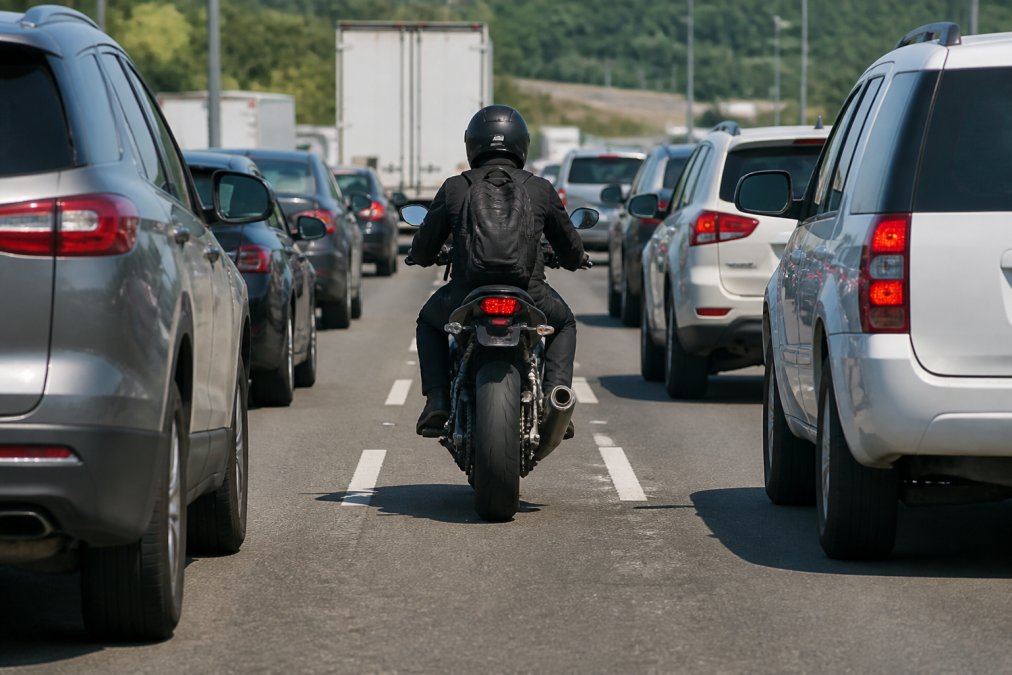
Lane splitting and lane filtering are not the same maneuver, and conflating them is the single most common mistake riders make when they try to argue their way out of a citation. The two practices differ by one variable, whether the surrounding traffic is moving, and that variable drives everything from crash risk to how an adjuster reads the police report.
| Feature | Lane Splitting | Lane Filtering |
|---|---|---|
| Surrounding traffic | Moving | Stopped or near-stopped |
| Typical speed differential | High (rider much faster than cars) | Low (rider creeps forward) |
| Primary risk | Driver surprise at speed; no reaction time | Door opens, mirror clip, pedestrian step-out |
| Common setting | Freeway, expressway | Signalized intersection, congestion |
| Legal status in Tennessee | Prohibited | Prohibited |
Even though both maneuvers are illegal here, the split/filter distinction is not academic. It shows up in three practical places after a crash:
Tennessee has not legalized either practice, and the state's posture has been consistent. Bills that would have permitted limited lane filtering, typically restricted to stopped traffic at low speeds, have been introduced in prior legislative sessions but have not become law. That track record matters for riders because it signals the current political climate: Tennessee lawmakers have been willing to study the issue but not to carve out an exception to the lane-position statute.
Tennessee's motorcycle lane filtering laws prohibit overtaking and passing within a lane already occupied by another vehicle. The statute requires motorcyclists to remain within their designated lane, and it extends to cutouts between rows of stopped vehicles.
What does that mean in practice?
Comparative fault in motorcycle accidents determines how much compensation a rider can recover, and it's where lane splitting laws hit hardest. Tennessee uses a modified comparative fault system: if you are found more than 50% at fault, you recover nothing. Mitigating these financial risks requires riders to prioritize personal protection, as the right motorcycle jacket safety rating can significantly reduce the severity of injuries that might otherwise complicate a liability claim.
Here's how fault typically gets weighed:
| Factor | Effect on Fault Percentage |
|---|---|
| Rider was lane splitting at impact | Increases rider's share of fault |
| Driver failed to check blind spot | Shifts fault toward driver |
| Rider was within a designated lane | Supports rider's position |
| Traffic citation issued to rider | Strengthens negligence claim against rider |
A lane splitting violation can reduce or eliminate compensation in a motorcycle personal injury claim. When a rider is cited for the maneuver, the negligent driver's insurer will use that citation to argue the rider shares fault, cutting into damages for medical expenses, lost wages, and property damage.
Lane splitting laws shape insurance outcomes long before a settlement is negotiated, and the mechanism is more specific than most guides admit. Insurers do not simply "reduce" a claim because a rider was cited. They run a structured liability analysis, and the citation becomes the anchor for every number that follows.
When a motorcycle claim lands on an adjuster's desk, the first document reviewed is the police report. A lane-splitting citation in that report does three things at once:
A few realities riders should plan around:
Tennessee requires drivers to carry liability coverage, but the minimum limits are modest, and a serious motorcycle crash routinely exceeds them. When the at-fault driver's policy is exhausted, the rider turns to underinsured motorist coverage, and that is where the lane-splitting citation does its second round of damage.
Riding between lanes in Tennessee can be used to assign you majority fault, which under the state's modified comparative fault rule can bar recovery entirely. The consequence isn't a ticket; it's a denied claim, and it can follow you into a UIM claim even when the other driver was clearly negligent.
The riders who preserve their claims are the ones who build the liability record in the first 72 hours. That means:
Yes. Tennessee Code Annotated § 55-8-182 prohibits a motorcycle operator from overtaking and passing in the same lane occupied by the vehicle being overtaken. The Tennessee Traffic Safety Resource Service confirms lane splitting is not legal in the state, and cutouts (maneuvering between rows of vehicles) are also prohibited. Because the practice is illegal, riders who lane split and are involved in a crash often bear a significant portion of legal fault under Tennessee's comparative fault system.
If you were lane splitting when a crash occurred, Tennessee's comparative fault rules allow a court to assign you a percentage of fault. Under Tennessee's modified comparative fault system, if you are found 50% or more at fault, you recover nothing. If you are less than 50% at fault, your damages are reduced by your fault percentage. A motorcycle personal injury attorney can review the police report, accident reconstruction evidence, and witness statements to challenge an unfair fault assignment.
Tennessee uses a modified comparative fault system. If you are less than 50% at fault for a motorcycle accident, you can recover damages reduced by your percentage of fault. If you are 50% or more at fault, you recover nothing. For example, if a jury awards $100,000 and finds you 20% at fault, you receive $80,000. Because lane splitting is illegal, a rider who was lane splitting may be assigned a higher fault percentage, which directly reduces the final recovery.
Yes. Because lane splitting is prohibited under Tennessee law, a rider engaging in it is often found partially or fully liable for damages under the state's comparative fault system. Legal analysis indicates that a motorcyclist who lane splits and is involved in an accident will likely bear a significant portion of legal fault. That fault finding can reduce or eliminate your personal injury claim, and it may also expose you to a traffic citation under the motor vehicle code.
The research provided does not include a Tennessee-specific statistic on the percentage of motorcycle accidents caused by lane splitting. However, a University of California, Berkeley study analyzing over 6,000 motorcycle crashes found that riders who lane split were less likely to be rear-ended and less likely to suffer head or torso injuries compared to those who did not. That study reflects California conditions, where lane splitting is permitted, and does not change Tennessee's prohibition.
Common motorcycle accident injuries include head trauma, traumatic brain injury, spinal cord damage, bone fractures, road rash, and torso injuries. The UC Berkeley study of 6,000+ crashes found that riders who lane split were less likely to suffer head or torso injuries than those who did not, but that finding comes from a state where the practice is legal. In Tennessee, where lane splitting is prohibited, injuries from these crashes often lead to motorcycle personal injury claims for medical expenses, lost wages, and pain and suffering.
Tennessee's statute of limitations for personal injury claims is one year from the date of the accident. Missing that deadline generally bars your claim. Because lane splitting cases involve disputed fault, evidence such as the police report, accident reconstruction findings, and witness statements should be preserved early. Consult a personal injury attorney as soon as possible after a motorcycle accident to protect your right to compensation.

Cummings Law Car Accident & Personal Injury Lawyers Address: 4235 Hillsboro Pike #300, Nashville, TN 37215