Last Updated: August 21, 2026
A wrongful death claim is a civil lawsuit filed on behalf of a deceased person's surviving family members or estate when someone's negligence, recklessness, or intentional conduct directly caused the person's death. Unlike criminal cases, wrongful death lawsuits seek financial compensation rather than criminal punishment. The claim allows surviving relatives to recover damages for the economic and emotional losses they've suffered.
Wrongful death can arise from motor vehicle accidents, medical malpractice, workplace accidents, defective products, or criminal acts. What matters legally is proving that the defendant's actions or inactions fell below the standard of care expected in that situation, and that this breach directly caused the death. According to CDC data on unintentional deaths, there were 130,557 unintentional deaths in 2013, with leading causes including unintentional poisoning (38,851 deaths), motor vehicle traffic accidents (33,804 deaths), and falls (30,208 deaths).
The strength of a wrongful death case depends on evidence, clarity of liability, and damages calculation. Most cases settle out of court, with typical settlements ranging between $500,000 and $1 million, though cases involving gross negligence or significant earning potential can reach substantially higher amounts (Brandon J Broderick wrongful death settlement data).
Handling a wrongful death claim without legal representation is extraordinarily difficult. These cases involve complex procedural rules, strict deadlines, and technical requirements that trip up families trying to navigate the system alone. An experienced wrongful death attorney becomes your advocate during the most painful period of your life, handling the legal burden so you can focus on grieving.
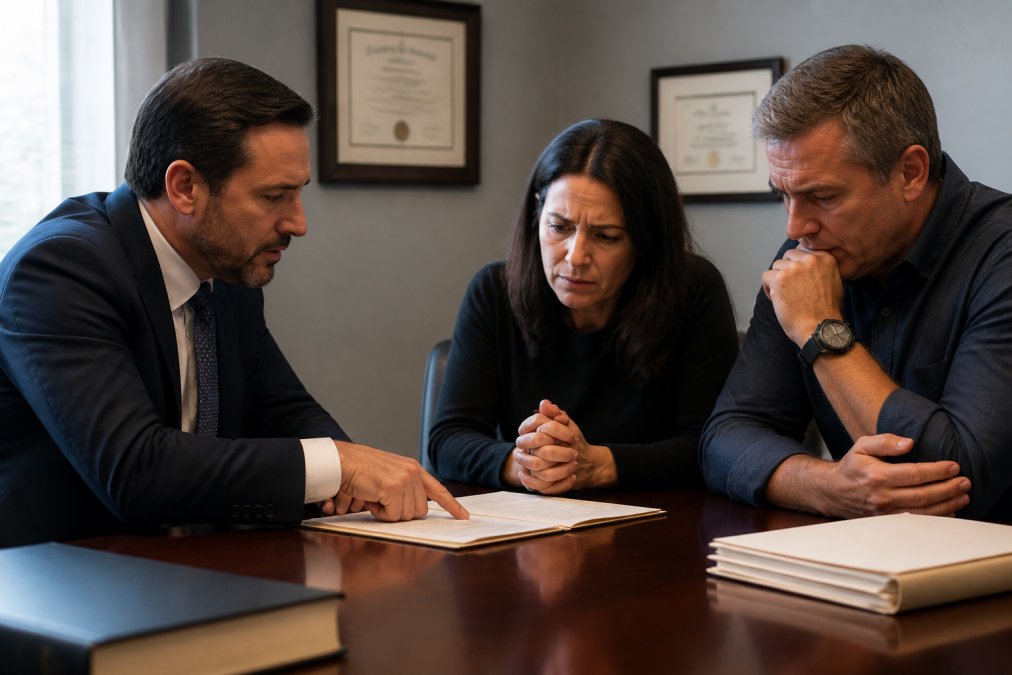
An attorney understands how insurance companies operate, knows how to value your claim properly, and can negotiate aggressively on your behalf. Insurance adjusters are trained to minimize payouts. Without legal representation, families often accept settlements far below what the claim is worth. A lawyer levels the playing field.
Beyond negotiation, an attorney manages evidence preservation, expert witness coordination, and the entire discovery process. They file motions, meet court deadlines, and handle depositions. One missed deadline can cost you the case entirely. Wrongful death attorney fees typically range from 33% to 40% of any settlement or award, meaning you pay nothing unless your attorney recovers money for you (Thompson Stam wrongful death attorney fees).
Cummings Law Car Accident & Personal Injury Lawyers has recovered over $47,000,000 for clients by building strong cases that insurance companies take seriously.
The contingency fee model is standard in wrongful death litigation. Your attorney accepts the financial risk of the case, working without upfront payment. You pay them only if they recover money for you. This structure ensures families aren't forced to choose between hiring legal help and paying their bills during an already devastating time.
Your attorney invests their time, resources, and expertise into building your case, advancing costs for expert witnesses, court filings, deposition transcripts, and investigation expenses. If the case settles or wins at trial, the attorney's fee and costs are deducted from your recovery. If the case loses, you owe nothing.
Contingency fees typically range from 33% to 40% of the final settlement or judgment. This percentage reflects the risk the attorney assumes and the work required. Without contingency representation, you'd either pay hourly rates ($200-$500 per hour) or go unrepresented entirely.
However, you remain responsible for case costs beyond the attorney fee. These include court filing fees (typically $200-$500), expert witness fees (which can run hundreds or thousands of dollars per hour), and deposition transcripts. Your attorney should discuss these costs upfront and explain how they'll be handled. Clarify this before hiring.
Understanding the timeline and stages of a wrongful death lawsuit helps you know what to expect.
Your first step is consulting with a wrongful death attorney. Most offer free consultations to evaluate your case. The attorney will ask detailed questions about how your loved one died, who was involved, what evidence exists, and the impact on your family.
The attorney assesses whether negligence can be proven, who bears liability, what damages you can recover, and whether the case is worth pursuing. Not every death supports a viable legal claim. The defendant's conduct must have fallen below the standard of care expected in that situation.
This consultation is also your chance to evaluate the attorney. Do they listen carefully? Do they explain things clearly? Do they seem genuinely invested in your case? You're entering a partnership during an incredibly difficult time. Trust and communication matter enormously.
Once you hire an attorney, the investigation phase begins. Your lawyer gathers evidence that proves negligence and establishes the defendant's liability. This might include accident scene investigation, medical records, witness statements, police reports, expert analysis, and surveillance footage.
In medical malpractice cases, your attorney typically hires a medical expert to review records and determine whether the healthcare provider deviated from accepted medical standards. In motor vehicle accident cases, accident reconstruction experts may be needed. In workplace deaths, OSHA records and safety violations might be central.
Your attorney also identifies all potentially liable parties. A comprehensive investigation ensures no responsible party is overlooked.
After investigation, your attorney enters settlement discussions with the defendant's insurance company or legal team. Most wrongful death cases settle without trial. According to Adamson Ahdoot LLP wrongful death settlement data, wrongful death claims tend to succeed at trial more often than general personal injury claims, with an estimated trial success rate of approximately 60%.
Your attorney will present the case's strengths, evidence supporting liability, and a damages calculation supporting your settlement demand. Insurance companies evaluate settlement offers based on their own risk assessment. If they believe trial could result in a larger judgment, they're more likely to settle.
You control whether to accept a settlement offer. Your attorney will advise you, but the decision is yours. Settlement provides certainty and closure. Trial is riskier but can result in larger awards, particularly if punitive damages are available.
Every wrongful death claim is governed by a statute of limitations, a legal deadline by which you must file the lawsuit. Miss this deadline, and you lose the right to sue entirely, regardless of the case's merit. This deadline is non-negotiable.
Statute of limitations periods vary by state and by the type of wrongful death claim. Some states allow one year from the date of death; others allow two or three years. Some measure the deadline from the date of death; others measure it from when the family discovered or should have discovered the negligence.
Filing the lawsuit before the deadline is critical. Delays in hiring an attorney can cost you the entire case if the statute of limitations expires. This is one reason why families should consult with a wrongful death lawyer quickly after a loss. An attorney can determine your state's deadline and ensure the lawsuit is filed in time.
Additionally, different rules may apply depending on who files the suit. Some states require the estate representative or executor to file on behalf of the estate; others allow surviving family members to file directly. therapy for grief and loss.
Hiring the right attorney can mean the difference between a fair recovery and a significantly diminished one.

Experience with wrongful death cases specifically. Ask how many wrongful death cases the attorney has handled, what the outcomes were, and whether they have trial experience. You want someone with proven experience in the specific type of death your case involves, whether that's motor vehicle accidents, medical malpractice, workplace accidents, or another category.
Track record of results. Request information about settlements and verdicts the attorney has obtained. Cummings Law Car Accident & Personal Injury Lawyers has recovered over $47,000,000 for clients, demonstrating the firm's ability to secure meaningful compensation.
Understanding of contingency representation. A good attorney explains how contingency fees work, what costs you might owe, and how your recovery will be calculated. They're transparent about fee percentages and don't hide surprise costs.
Communication and accessibility. You need an attorney who returns calls, explains things clearly, and keeps you informed. Wrongful death cases can take months or years. During your consultation, pay attention to whether the attorney listens carefully and answers your questions thoroughly.
Genuine empathy. The attorney should demonstrate genuine compassion for your loss, not just transactional interest in the case. This means treating your family with respect and understanding the gravity of what you're facing.
Local knowledge and resources. An attorney familiar with local courts, judges, and procedures has advantages. They also have established relationships with expert witnesses, investigators, and other professionals necessary to build strong cases.
Wrongful death damages fall into two primary categories: economic damages and non-economic damages.
Economic damages represent measurable financial losses, including lost wages and earning potential the deceased would have earned during their remaining working years, medical and funeral expenses, loss of benefits like health insurance or retirement contributions, loss of household services the deceased would have provided, and cost of raising minor children to adulthood.
Non-economic damages compensate for emotional and relational losses that don't have a direct dollar figure, including pain and suffering of surviving family members, loss of consortium (the loss of companionship, guidance, and emotional support), loss of parental guidance for minor children, and emotional distress and grief. Some states cap non-economic damages; others do not.
Punitive damages are available in some cases where the defendant's conduct was particularly egregious, reckless, intentional, or showing gross negligence. They punish the defendant and deter similar conduct by others. Not all cases qualify for punitive damages, but when they do, they can significantly increase the total award.
If you've lost a loved one due to someone else's negligence, here are the concrete steps to take now:
Step 1: Gather documentation immediately. Collect the death certificate, medical records, police reports, accident scene photos, and witness contact information. Preserve evidence before it's lost or destroyed.
Step 2: Document your family's losses. Keep records of funeral expenses, medical bills, lost wages, and the impact on your family. These documents will support your damages claim later.
Step 3: Consult with a wrongful death attorney as soon as possible. Don't wait. Statute of limitations deadlines are unforgiving, and evidence can disappear. Most attorneys offer free consultations.
Step 4: Ask the attorney about contingency representation. Confirm that the attorney handles your case on a contingency fee basis. Understand what costs you might owe and how fees will be calculated.
Step 5: Provide complete information to your attorney. Share everything you know about how your loved one died, who was involved, and what evidence exists.
Step 6: Stay involved but trust the process. Your attorney will handle the legal work, but stay informed about case progress. Wrongful death litigation takes time, but your attorney is working to secure the compensation your family deserves.
Losing a loved one to someone else's negligence is devastating. You shouldn't have to navigate the legal system alone while grieving. Cummings Law Car Accident & Personal Injury Lawyers specializes in wrongful death cases and has recovered over $47,000,000 for families across Middle Tennessee. Operating on a contingency fee basis, they handle the legal burden so you can focus on what matters most. Contact them for a free consultation to discuss your case and understand your options for pursuing justice and compensation for your family's loss.
Wrongful death settlements vary widely depending on the victim's age, earning potential, and the circumstances of the case. Most cases settle between $500,000 and $1 million, though some reach significantly higher amounts. In one notable case, a jury awarded $640 million for a fatal crane accident involving gross negligence. The strength of evidence and the defendant's liability significantly influence the final settlement amount.
Wrongful death claims have a higher success rate than general personal injury lawsuits. Approximately 60% of wrongful death cases that go to trial result in a win for the plaintiff, compared to 48% for all personal injury lawsuits. This higher success rate reflects the severity of these cases and the evidence typically available. However, outcomes depend on case-specific factors, the quality of legal representation, and the strength of the negligence evidence presented.
The timeline for wrongful death cases varies considerably. Cases that settle out of court typically resolve faster than those going to trial. The discovery phase, which involves gathering evidence and depositions, can take several months. Most cases are resolved within 1-3 years, though complex cases may take longer. Your attorney can provide a more specific timeline based on the details of your case and the court's schedule.
Surviving family members, including spouses, children, and parents of the deceased, are typically eligible to file wrongful death claims. In some cases, the estate representative or executor may file on behalf of the estate. The specific individuals who can bring a claim depend on state law and the family structure. An experienced wrongful death attorney can determine who has legal standing to pursue the claim in your situation.
This article was written using GrandRanker

Cummings Law Car Accident & Personal Injury Lawyers Address: 4235 Hillsboro Pike #300, Nashville, TN 37215